October 16, 2025
Articles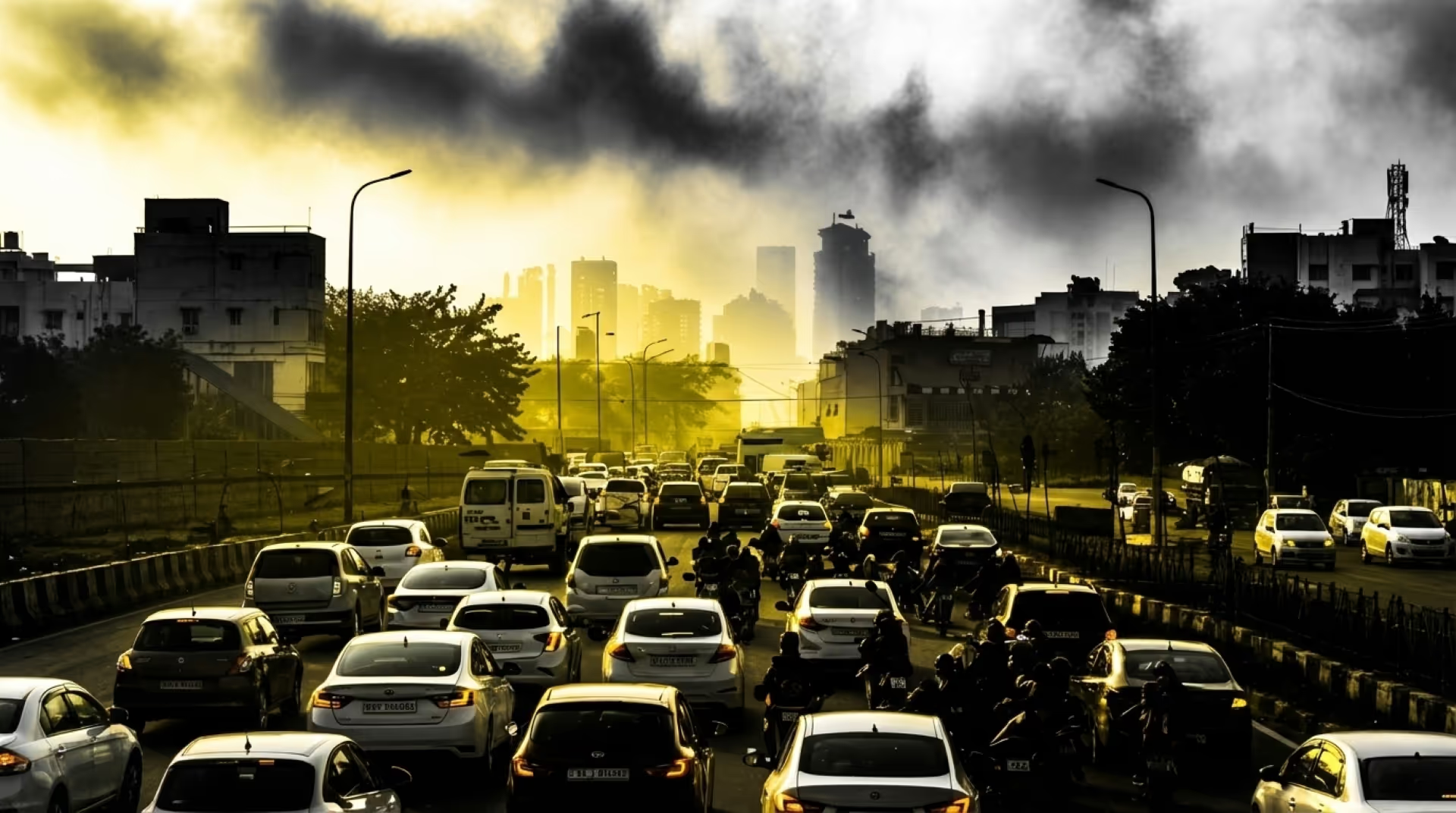
Every October, Gurgaon’s air quality deteriorates, triggering GRAP measures and prompting residents to take precautions. By December, the immediate crisis subsides, only to return the following season. This recurring pattern is not a failure of intent, authorities and citizens are both engaged but it highlights a policy implementation gap and a need for stronger governance mechanisms, institutional resilience, and anticipatory policy levers to ensure year-round breathable air.
The challenge is rooted in three areas. First, pollution response remains reactive: measures are triggered once AQI thresholds are breached, after the air has already turned hazardous. Second, monitoring and coordination systems, while improving, face scale and redundancy limitations, underscoring the need for intergovernmental coordination and data-driven decision-making. Third, residents, though increasingly aware, lack structured avenues for multi-stakeholder engagement that could translate awareness into action.
Despite the frustration of seeing this cycle repeat annually, there is reason for optimism. Gurgaon has built a solid foundation through regulatory frameworks like GRAP, expanding monitoring networks, and active engagement from municipal bodies. The next step is to evolve policy instruments through innovation, making interventions anticipatory, resilient, and adaptive.
A promising direction lies in learning from Beijing’s “Clean Air Action Plan,” which transformed one of the world’s most polluted cities into a model of rapid air quality improvement. Between 2013 and 2017, Beijing cut PM2.5 levels by over 50% through a combination of industrial relocation, vehicle emission control, and strict regional coordination. The new Delhi NCR “Beijing-style” plan in the works aims to replicate this approach: regulating the entry of high-emission trucks and polluting industries, introducing incentive and disincentive schemes, establishing a significant air quality fund, and running sustained public awareness drives. Gurgaon could be an ideal testbed for such an integrated, city-level strategy focused on both regulatory discipline and behavioral change.
Global examples further reinforce this shift. London’s hyperlocal sensor networks feed real-time data into traffic management systems and public advisories, enabling preventive action. Singapore uses predictive analytics to anticipate haze and coordinate measures regionally. Cities like Bogota and Tokyo implement “Pollution Action Days” with automatic enforcement triggers. Adapting such models could help Gurgaon anticipate spikes, reduce health impacts, and maintain better air quality without waiting for reactive measures.
Locally, the city can explore several low-cost, high-impact steps. A dense network of IoT sensors can power hyperlocal data analytics, guiding dust suppression, traffic rerouting, or construction curbs in real time. GRAP could evolve into a “Smart GRAP”, linking forecast models to automated, preemptive interventions. Geospatial mapping of pollution hotspots can guide proportionate enforcement and resource allocation. Public dashboards and citizen-led monitoring would strengthen evidence-based policy and improve transparency.
Regional cooperation is equally vital. Pollution doesn’t stop at district boundaries, so a coordinated NCR framework can synchronize preventive actions and align compliance standards. Urban greening, buffer zones, and Miyawaki-style plantations can reduce dust and heat retention. Incentives for low-emission vehicles, flexible work arrangements during forecasted pollution peaks, and communication campaigns represent behavioral policy instruments that create collective accountability instead of relying solely on enforcement.
This isn’t about criticism; it’s about constructive policy evolution. Gurgaon’s administrators, industry, and citizens have already shown commitment and creativity. By combining predictive technologies, robust monitoring, coordinated governance, and civic participation, the city can move from reactive responses to resilient, anticipatory governance. Frustration can, and should, become a catalyst - a reminder that with thoughtful policy design and shared ownership, clean air is not an annual aspiration but an achievable, sustained outcome.
(The opinions expressed in this article are solely my own and do not reflect the views of my employer or any affiliated organization.)